Every verse, three ways
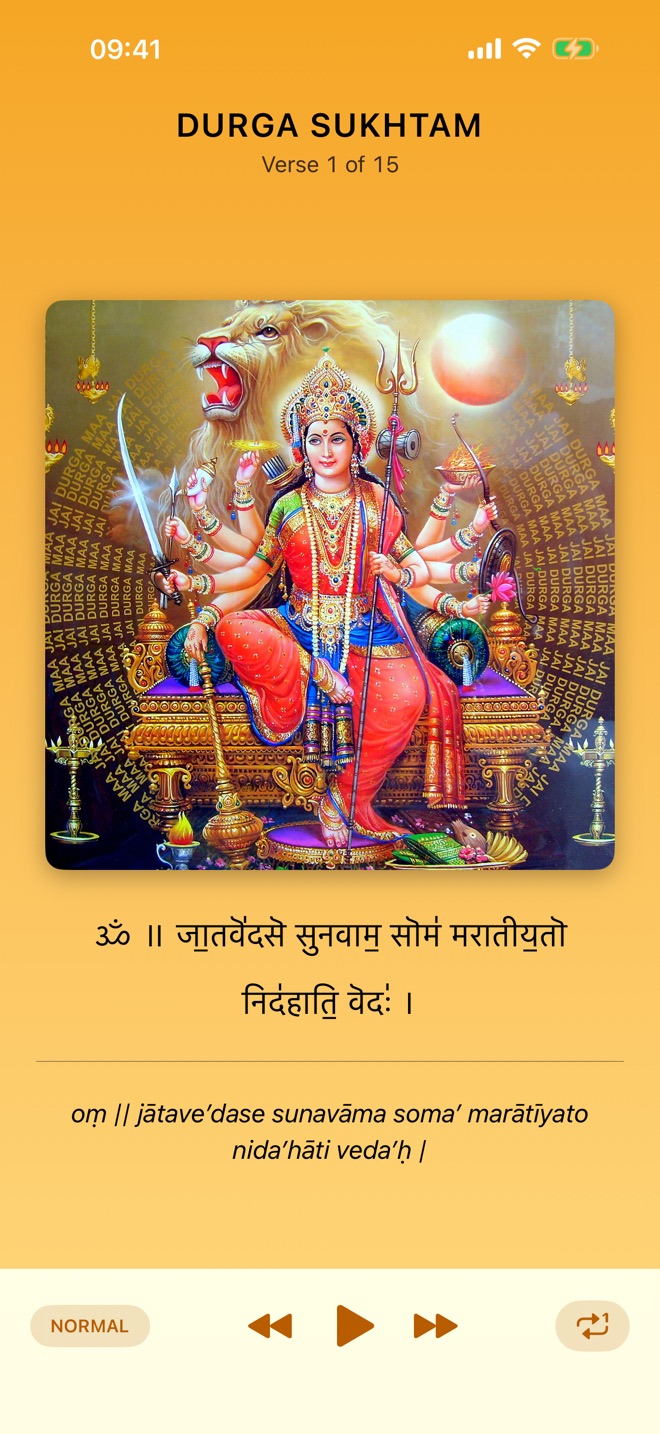
The Devanagari with its svara marks intact, a transliteration for checking yourself, and the recitation to follow.
Verse one of fifteen · Mahānārāyaṇa Upaniṣad
ॐ ॥ जा॒तवॆ॑दसॆ सुनवाम॒ सॊम॑ मरातीय॒तॊ निद॑हाति॒ वॆदः॑ ।
oṃ || jātave’dase sunavāma soma’ marātīyato nida’hāti veda’ḥ |
Udātta. The mark above raises the pitch.
Anudātta. The mark below lowers it.
Fifteen verses of the Durga Sūktam, each with its Devanagari text, a transliteration, and a recitation you can slow down until the pitch is yours. No account, no signal required, nothing collected.
What the app does
The Devanagari with its svara marks intact, a transliteration for checking yourself, and the recitation to follow.
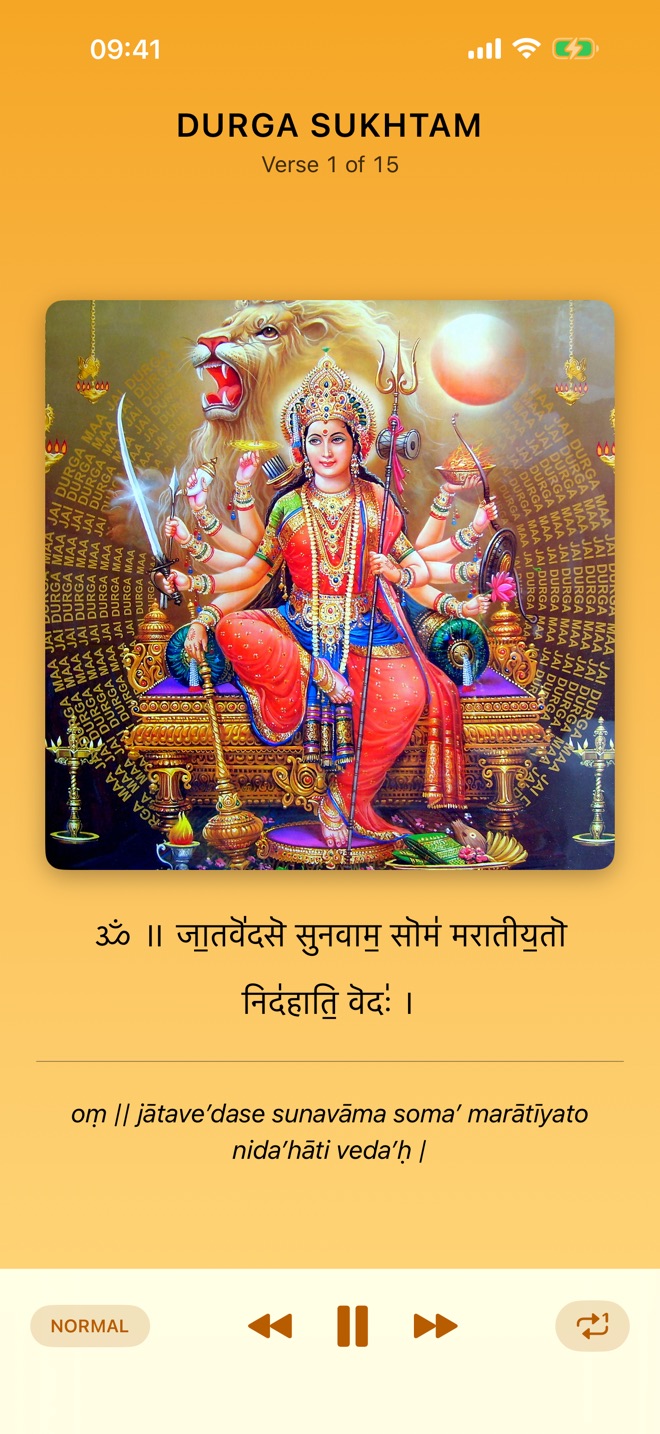
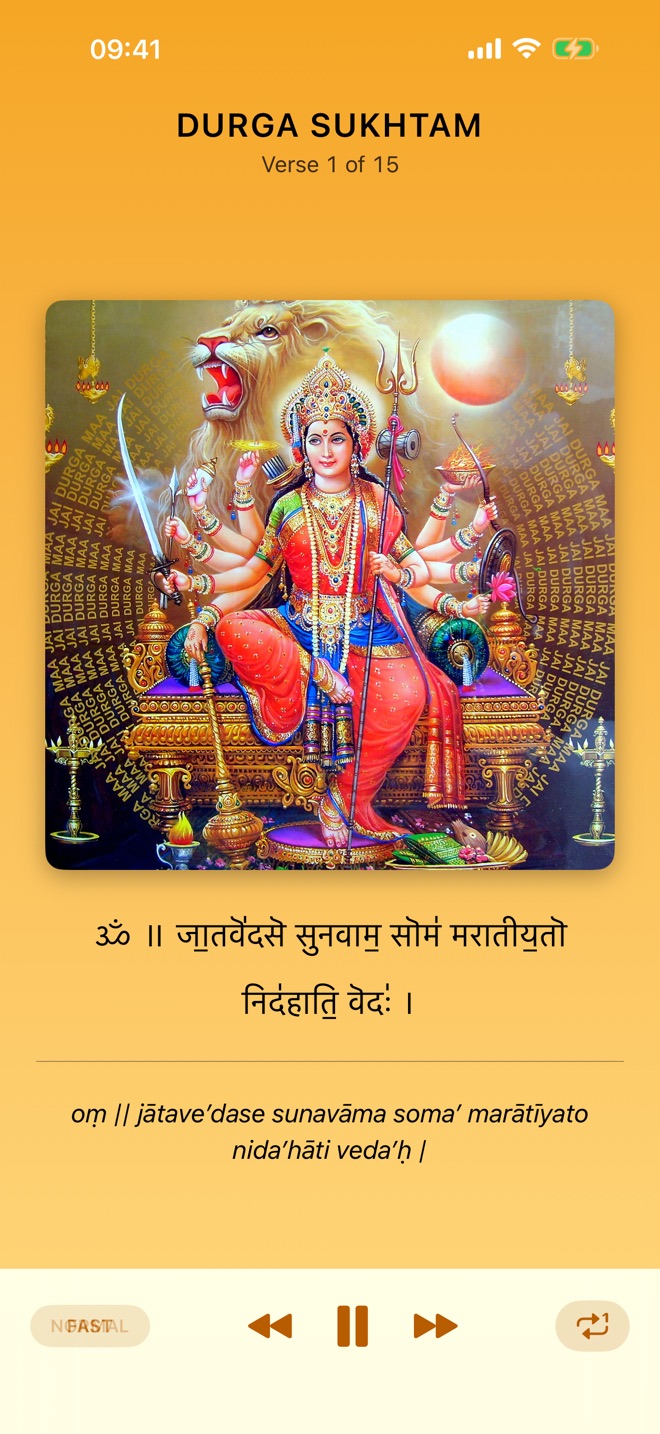
Play at normal speed, faster, or slower. Useful when a phrase runs away from you and you need to hear where the pitch actually turns.
Loop a single verse for as long as it takes, or move through all fifteen in order. Swipe between them, or use the buttons.
Full Lock Screen and Control Center controls. It pauses when you unplug your headphones or take a call, and picks up afterwards.
On the phone
About the text
The Durga Sūktam is a hymn addressed to Agni as the one who carries the reciter across difficulty. It appears in the Mahānārāyaṇa Upaniṣad, the closing section of the Taittirīya Āraṇyaka, and is commonly recited in fifteen verses.
The marks above and below the letters are svara. They notate pitch rather than stress, and Vedic recitation preserves them exactly — which is why the text has always been passed on by ear rather than simply read. Printed alone on a page they are easy to miss, and impossible to learn from.
That is the whole reason this app exists: to put the marks, the words and the sound in the same place, so someone without a teacher in the room can still hear where the pitch is meant to go.